Regression Therapy - Stories
Posted on Wednesday, Dec 3, 2025 | Mental Health, Art, Creativity, Mental Illness, Art Therapy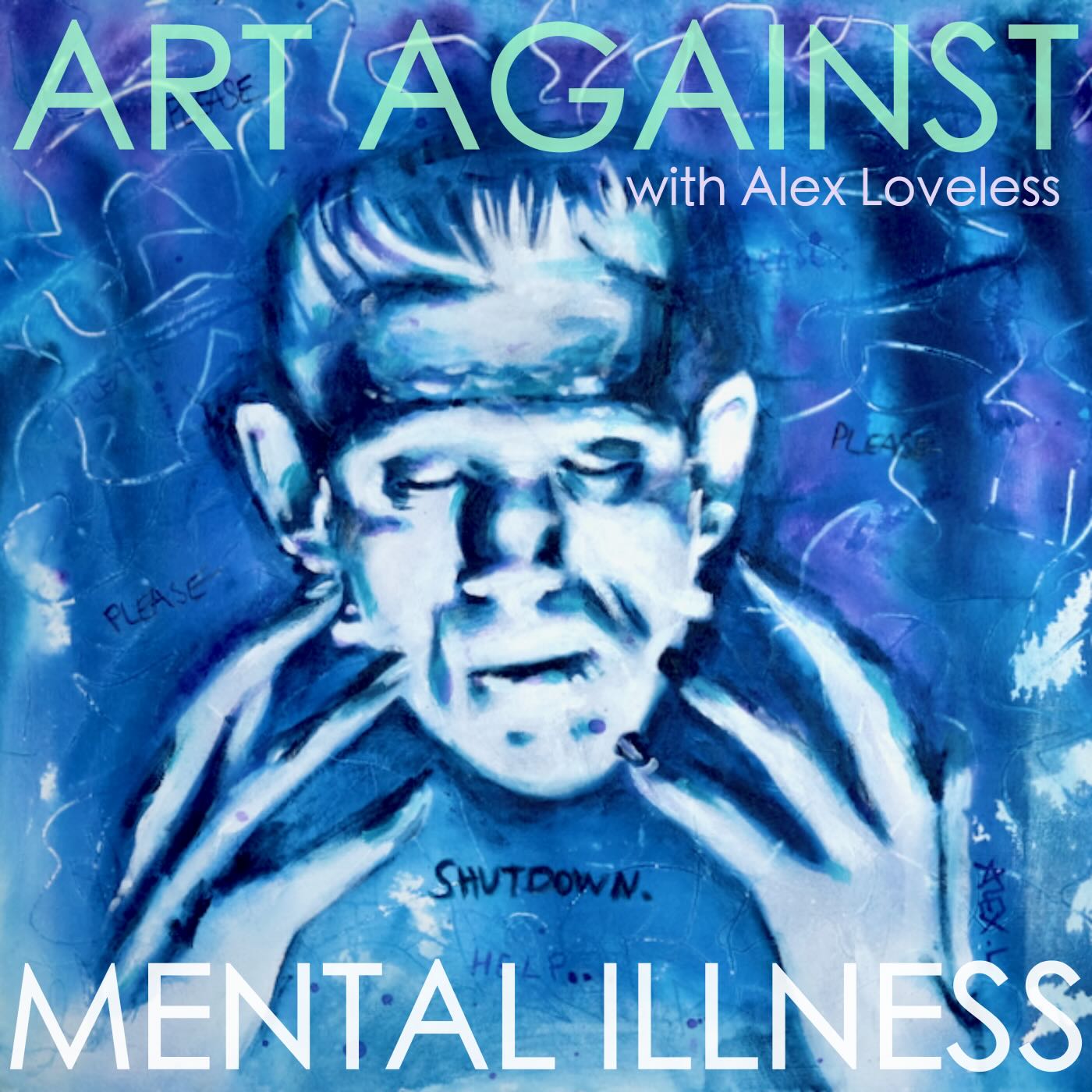
Alex talks about the role of stories in how humans perceive the world and the role that art plays within this. He explains, using stories, how an artist encodes their story into every artwork, often in a non-linear fashion. Alex also talks about how autistic people feel compelled to tell their stories as a way of empathising with other people.
Transcript
Nobody gave me sin for this That’s reason why I try both This is all that’s old, I can see a thousand times of this Out against mental illness Out against mental illness Hello everyone, I’m currently working on a rather epic series of episodes on writing and authoring which includes a bunch of interviews by published authors and it’s taken me quite a while to pull together and edit and make sound amazing So in the meantime, here’s an old episode about telling stories to whet your appetite a bit So watch this space for some amazing stuff relating to writing and mental illness See you all soon Out against mental illness Once upon a time there was a teenage boy He was awkward and odd and kind of shy He had a friend who was kind of odd like him whose house he would go around to watch Fascinated as he drew bizarre pictures of vampires, zombies and superheroes It was all a bit Stephen King Anyway, the boy was enthralled He wanted to do the same He also wanted to make stuff like the stuff he saw around him like posters, all that sci-fi stuff that was everywhere in the early 1980s by illustrators such as Drew Struzan who did all of that amazing Spielberg stuff as well as those incredible Iron Maiden album covers by Derek Riggs He started making his own pictures initially like his friend then trying to copy all the other incredible stuff he saw around him Over the coming years he became very proficient Eventually he became a man He wanted to be an artist for a while but then he wanted to be many things In his early 20s he met a girl and they were to have many adventures together but those adventures got in the way of making art and it all fell by the wayside He followed other paths In his 40s he came back to his art Again finding pleasure in this he began to take it increasingly seriously He eventually started trying to make money from it He also started a podcast The End Well, not quite the end but the end of that chapter maybe or maybe a beginning Most stories in books, in films, TV, in culture have a beginning, a middle and an end The best ones can be experienced repeatedly and yield more detail, insight and delight over time When each person experiences one of these cultural artifacts it takes on a slightly different meaning but it’s still, for the most part, enclosed, complete and finished But no story is an island Stories come from, sit within and influence larger stories Those of the author, their culture and its history That of the human race, that of the earth, the universe And those stories are all still works in progress And each story within this wider framework changes its meaning, its substance as the context of history around them shifts New eyes evaluate with new values Every moment that every human, every organism exists They exist as a product of the whole of history to that point The past points crisply towards this moment The future converges backwards to point at the same moment This moment is all there is Since memory is fallible and we only have our own perspective to work from What we know of the past is stories History is stories Experience is stories Memory is stories Similarly, we can’t meaningfully see into the future But we can create future moments in the form of plans in the hopes that they happen And we can make things Some of those things might actually be stories But everything you produce projects forward to create or contribute to the great web of stories The best art not only exists within that story It doesn’t simply contribute to that story It defines it Think Shakespeare, Da Vinci, Newton, Spielberg Donald Trump? Let’s not push our luck, eh? But for all this cosmic bluster stories are really about one thing Characters and their journey The heroic struggle The tragedy The comedy The ecstasy But characters like you and me Maybe you don’t consider your art Your creations As autobiographical like I do But they are whether you like it or not They are the product of your genetics Your upbringing Your experiences Your passions Your quirks It’s all you Until it’s not As I said in my episode on sharing Once you share your work It also becomes part of someone else’s story In fact, since recording that episode I predictably discovered that I’m not the first person to come up with that theory French literary theorists and philosopher Roland Baths also had a lot to say on this subject In his essay, The Death of the Author Baths argues the interpretation of a text or by extension an artwork should not be limited by the author’s intentions biography or psychology According to Baths once the work is created and shared it is detached from the creator and belongs to the realm of the audience or the readers who create their own meaning from it The point is that you bake yourself into your work and that in turn gets gobbled up by whoever consumes it and integrated into their world into their stories sending narrative ripples outwards in time and space but not necessarily in a linear way The thing is, like stories art is a form of time travel It allows us to surf the wave of entropy in either direction as we encode our hopes, emotions and visions into our artworks as well as our experiences So even though it’s always only now you can experience another moment in time via a story or other artwork and integrate it into your now The best stories, or maybe the best storytelling uses gradual exposition to build setting and character rather than explaining all at once what and where we’re being introduced to which is a no-no in literary land This is partly because infodump style exposition is dull but the wonder of a great story is precisely in the exposition of the characters and their story because the character and the story can’t be separated It also mimics the way that we learn about other humans as our stories intertwine with theirs for better or for worse whether shallow and fleeting or deep and lifelong Similarly, as an artist you choose what of you to expose and when You control that exposition the narrative and the pace of the story and you can, and almost certainly already do expose your narrative in a non-linear way drip feeding it from one work to the next and as your artistic voice evolves so does the way that you tell your story almost as if you’re harmonising with your past self singing the same song but with different complementary voices Stories can also be exposed in layers like deconstructing an onion often starting with a sketch and outline just the details and slowly exposing more detail and more depth and each new exposition reveals details about the story which casts it in a whole new light a bit like the moment that you discover Luke Skywalker is actually a kid of a Jedi Knight After you know that, you see everything in a new light Take the story with which I started this episode Let’s see what happens if I fill in some more details The boy was afraid of bats and after his parents were murdered in a dark alleyway he became a masked vigilante crime fighter Ok, that’s Batman The boy I was originally referring to, now in his 40s He painted a picture that depicted Boris Karloff in his iconic role of Frankenstein’s creation He depicted it in fluorescent daygill-o colours It was one of the earliest pieces he painted after reprising his art hobby It sort of just poured out of him The image sat upon a collage of words torn from magazines and newspapers Words such as nerves, label, impulse, broken, obsessive as well as the torn remnants of the information leaflet for the medication methylphenidate otherwise known as Ritalin The symbolism of a man made of random pieces of other human beings clumsily put together resonated with him since that was how he’d always felt He titled the painting David his dad and his sons’ middle names Rewind two years The man sits in his car staring blankly at the office of a technology giant his employer beset with feelings of dread and utter hopelessness He had a job that many would be envious of paying eye-watering sums of money yet he felt worthless The idea of getting out of the car and walking into that office filled in with horror just like it had the day before and the day before that Rewind to a few years before that The man sits by a swimming pool in Crete His kids splash carelessly before him His wife dozes contentedly beside him Everything seems idyllic He can’t understand why he feels so miserable Rewind to some point in the mid-80s The boy is writhing in absolute terror as his so-called friends one holding each of his limbs suspend him over the storm drain They told him that the evil zombie Arthur Grimsteich lived down there and that he would launch a spear out at the boy and kill him This was not the first time this had happened and it wouldn’t be the last Stephen King’s novel It hadn’t been released yet It didn’t matter to the boy He was terrified anyway Fast forward to around 6 months before the Frankenstein piece was created The man sits in front of his therapist They are discussing the mindful activities that might help calm the man’s frenetic brain The hope is that this will help him with his recurring depression, panic and anxiety He mentioned that he used to make art and maybe that would be worth a try Fast forward 6 years The man had lost his job a few months earlier and was struggling to find work He was recovering from the major mental health episode that this had caused His art had played a major role in his ongoing recovery His ever frenetic brain had the idea that maybe he should start a podcast about artists and form a therapy Maybe he could help himself by helping other people Most people see David, the painting, as a wacky rendition of Frankenstein’s monster Pop art or some such stylistic frivolity They either like it or they don’t If anyone asks what it’s really about What all the torn up strips of magazines mean I might give them bits and pieces of that story Occasionally people see something entirely different For example, one lady bought a print of it She explained that she had spent years recovering from a life-threatening brain trauma and the image helped her make sense of that experience The image itself is a piece of art made from other people’s artwork Mary Shelley, who wrote the original novel Boris Karloff, who played Frankenstein’s creation His make-up artist, Jack Pierce, who was responsible for that iconic look Director, James Whale The impetus for the novel was instigated while Shelley holidayed with her husband Poet, Percy Bysshe Shelley Original megastar heartthrob, Lord Byron And John Polidori, who went on to write a novel about vampires for the same reason Their stories are woven into the artwork too Incidentally, this all happened while they sheltered from The Year Without a Summer Which was caused by the eruption of Mount Tambora So that goes into the mix too Perhaps through Mary’s mother, proto-feminist icon Mary Walkstonecraft into the mix And perhaps through Ritalin creator Leandro Panitzon in there too And even his wife Rita, after whom he named it I could go on I’ve made hundreds of artworks And millions are made every year across the world Some have greater impact than others But all make their mark in some small way This is how society functions Art isn’t just for the artist or art lover It’s for everyone, whether they know it or not It is a distillation of culture Like a dynamic piece of reality frozen in amber But one that actually affects the world around it This has all been pretty abstract and philosophical so far Since much of the impact of art happens once the artist has set it free But the artist still played a starring role in the story in a very real sense I experienced this recently when I took on an eight-piece commission for a couple that lived near me We worked closely together over the space of two months Deciding on what I would create, where it would be hung, the colours, the theme, the style We all learned lots and had a great time doing that And for as long as they lived they will remember that experience And, I hope, cherish it And will be reminded of it every time they see those paintings It’s part of their story now This effect is particularly prominent with pop stars and the like Especially in the hyper-connected modern world Swifties follow Taylor’s every move Her life is in her music And the Kendrick Lamar vs Drake rap feud Has manifested in an ongoing public work of music and cultural art The stories of artists, authors and creators aren’t the only ones that matter Not by a long way And many creators make it their business to tell someone else’s story But even then they write some of their own in there In the facts that they choose to expose Turn a phrase Their levels of reverence or disdain You tell your story with every word, note or brush stroke With every breath, with every heartbeat Keep on telling it History needs you Homework for this week? Go find some art and arrange it in some order that means something to you It could be your own artwork or someone else’s It could be some painting, some photos, some music Go make a mixtape Put it in an order that resonates with you Try some different orders and see what it tells you about your story Or the story of the artist Or the story of the events or the people in the world that it depicts Think about that story that it tells Think about how it tells a wider story And think about what it says about your story I just want to say something quickly about the fact that I spend a lot of time in this podcast selling my own story In fact, most of this podcast was spent doing that I’m autistic, as I’ve said before And autistic people have a tendency to relate to other people by telling their own stories It’s a way of empathizing It can make autistic people come across as being quite selfish or self-centered or single-minded And it’s not that way at all It’s just that we find it much easier to relate to someone by telling other people stories about ourselves Autistic people tend to be great storytellers So if it seems like this podcast is a bit of a big ego piece for me Please understand that it isn’t This is just how I relate to the world Secondly, I found that when I open up to people, they tend to open up back to me They tend to be very thankful for me being so honest and open with my own stories, with my own struggles And it makes them feel better and it makes them feel more able to talk about their stories In the past, I just used to do this reflexively I would just relate my own stories to people And then I found they would just pour their hearts out to me And a lot of the time, I didn’t know what to do I was like, well, why are you telling me your life story right now? But over time, I started to see it as a bit of a superpower That if I could help people open up and talk about themselves, then they would feel better And I would learn something and everyone would be better off So that’s why I’d do it I hope I don’t bore you too much with my stories And I’m not going to stop doing it I’ve got lots more stories to tell And I’ll probably find some other people to help me tell some stories at some point as well And I hope you find it helpful and valuable And I hope it helps you tell your story to someone else tooShow Notes
While Alex works on his epic new series on writing and authoring as therapy, here’s a classic episode on stories in which he talks about the role of stories in how humans perceive the world and the role that art plays within this. He explains, using stories, how an artist encodes their story into every artwork, often in a non-linear fashion. Alex also talks about how autistic people feel compelled to tell their stories as a way of empathising with other people.
Notes
- The Death of the Author by Roland Barthes
- More info on Mary Shelley’s scary sojourn
- More info on Panizzon and the genesis of Ritalin