How to Be Creative Part 3 - Master of None
Posted on Monday, Nov 10, 2025 | Mental Health, Art, Creativity, Mental Illness, Art Therapy, Creativity, Outsider Art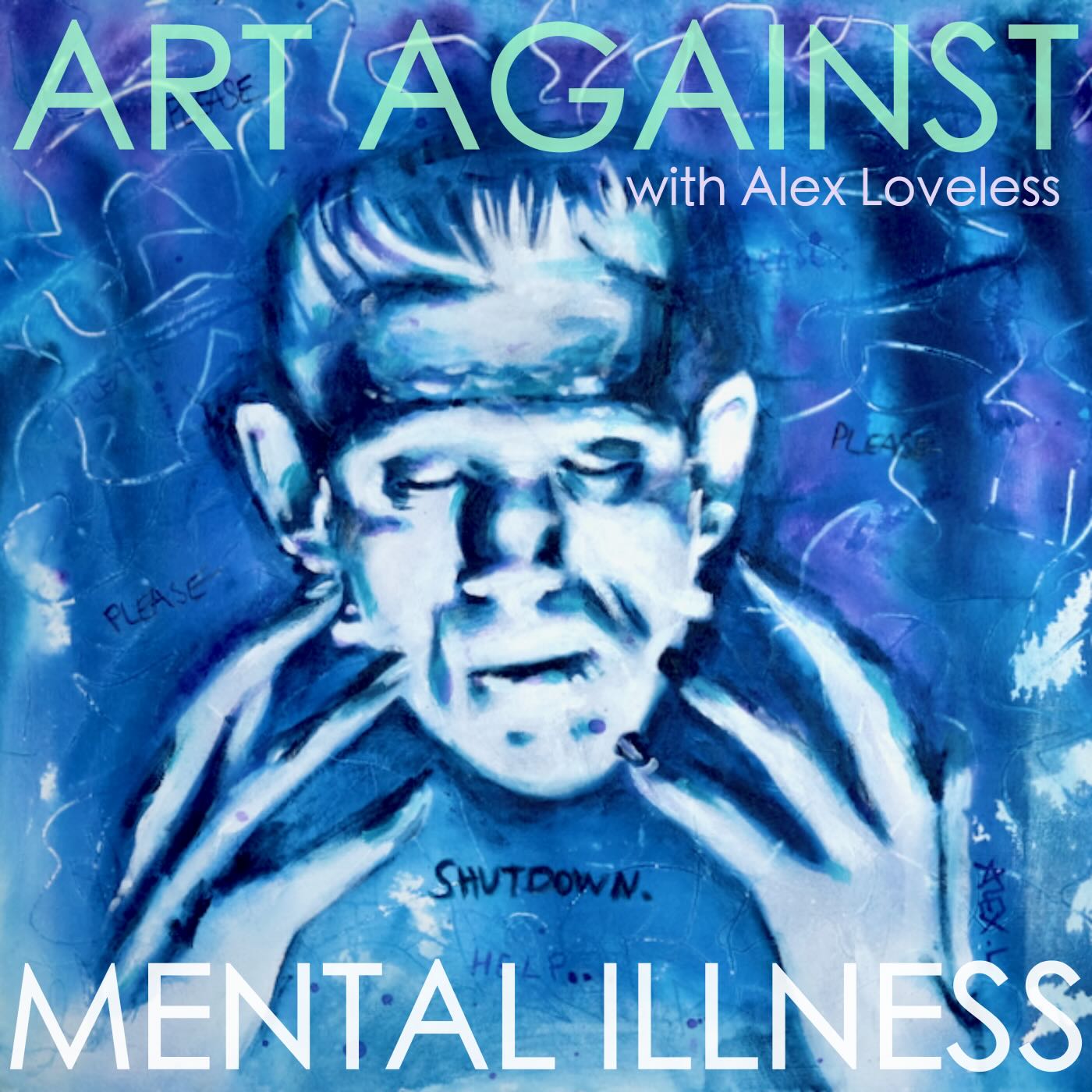
Alex finally presents long awaited third part of his How to be Creative series, in which he takes us on a journey through the magical and maligned world of outsider art, takes aim the art ’establishment’ and makes a case for having a ‘just do it’ attitude to creativity.
Transcript
No body can miss him for this That’s reason why I try both This is all that’s old, I can see a thousand times of this When Nathan Lerner, a photographer and designer and his wife Kyoko, a pianist, bought 851 West Webster Avenue Chicago in 1956, they inherited several tenants. One of these, Henry, was a reclusive janitor and dishwasher in his 50s, who seemed barely able to care for himself. Despite being urged by fellow landlords to evict the apparent weirdo, they took pity on the taciturn old geezer. They not only let him stay, but they even reduced his rent. They became his de facto custodians for the rest of his life and acted as carers when he retired due to ill health. Kyoko helped him with household tasks while Nathan helped out with admin finances and otherworldly affairs. The recurring tasks performed by Kyoko was changing Henry’s light bulbs, something she had to do far more often than would have been expected because apparently it was later discovered Henry didn’t sleep much. This relationship continued for 20 years until, in 1973, aided by the learners, Henry moved to a nursing home, which was necessary because he could no longer climb the stairs to his apartment. When Nathan asked Henry what he would like to do with his belongings, Henry told him to chuck it all away. He didn’t want to keep any of it, and he didn’t think it would be of any use or interest to anyone else. Nathan duly obliged. However, this was not quite the straightforward task that it might have seemed. You see, Henry was what you might politely call a hoarder. Among the multitudes of detritus Nathan discovered in Henry’s apartment were piles of newspapers, 40 years worth, magazines, broken furniture, glasses of the reading kind, lots of them, string balls, shoes in various sizes. Henry, being very poor and pathologically resourceful, could often be seen rummaging through neighbours’ bins on collecting sprees. So voluminous was Henry’s collection. Nathan resorted to renting trucks, which he parked below the window of the apartment to catch all the crap he and his friend who he roped in to help him throw out the window. A couple of days of this toil passed before they discovered the two chests. What they found in those two chests literally changed the learners’ lives. For what they found was the life works of outsider art genius, Henry Darger. This included the 15,000 page novel entitled In the Realms of the Unreal, typed, as well as its handwritten sequel, Darger’s autobiography, The History of My Life, and 10 Years of Daily Weather Reports, those predicted by newspapers and what actually occurred. But that was just the beginning. Darger’s epic, fully titled The Story of the Vivian Girls in what is known as the Realms of the Unreal of the Glog-Anglic Warstorm caused by this child-slave rebellion, chronicled an epic fantasy war where seven young sisters led a rebellion against child slavery, set in a world of his own creation, with its own geography, mythology and the cast of hundreds. And it wasn’t only words. Once they discovered the initial payload and recognised what they had on their hands, they immediately stopped chucking stuff out the window and the job turned from evacuation to excavation. It didn’t take them long to discover the bed. You see, Realms of the Unreal wasn’t just a written epic. Darger created hundreds of illustrations for the epic, most of which were on huge rolls of paper that had somehow been hand bound. These were intricate and wildly creative, bizarre, beautiful, harrowing and all handmade. Darger had no formal artistic training, so he made it up as he went along. Taking clippings from newspapers, magazines, comics, colouring books, he traced images sometimes over and over again. It was a multimedia tour de force. Picture massive watercolour battle scenes stretching ten feet across, populated by ethereal young girls caught in apocalyptic warfare. Darger traced figures from children’s books and magazines and painted over them in saturated, psychedelic colours that shouldn’t work but somehow do. Seven sisters leading child-slave rebellions through pastoral landscapes turned into battlefields. Technically wrong, by academic standards, wonky perspective, copied elements, childlike drawing, yet the work pulses with more raw emotional powers than most gallery darlings ever achieve. Pure compulsive vision made real, completely free from any notion of proper technique. Nathan visited Darger in the retirement home and put it to him that he was an artist. Darger’s response was, yes, but it’s too late now. Darger was dead within weeks. Nathan Lerner, being a creative himself, recognised what he had in his hands. He and Kyoko set about trying to get the art fraternity to pay attention. Given the quality of Darger’s work, this proved harder than you might expect. Darger just didn’t fit into any of the contemporary art scenes and since he didn’t come via the established roots, essentially via art school, he fit nowhere and therefore was nobody. He didn’t matter and therefore his art didn’t matter. It was the output of a crank, a weirdo, a loser, an outsider. But the Lerner’s were persistent. They recognised the genius in Darger’s work and weren’t about to let it go unnoticed. But it took time, a long time. By the time Nathan Lerner died in 1997, Darger’s legacy would still only amount to a few exhibitions and an underground following. Kyoko continued to fight for the recognition Darger deserved and in 2001 she donated the entire contents of Darger’s room, largely untouched and used as an odd tourist destination for outsider art enthusiasts to intuit museum of outsider art in Chicago. This seems to have been somewhat of a catalyst, as was the wider acceptance of outsider art, and the early 2000s saw collectors finally investing in Darger’s work and the first book was published documenting his genius. These days, Darger is widely recognised as an artistic genius and often the gateway drug to outsider art. His artworks can fetch hundreds of thousands of dollars and have influenced more establishment artists such as Grace and Perry. There is at least one rock band, the Vivian Girls, for Darger’s work. It’s a story that’s both tragic and heartwarming, triumphant and frustrating. Darger didn’t live to see his work recognised but by all accounts likely wouldn’t have enjoyed the limelight. Way back in episode 4 of this podcast, I talked about poet Emily Dickinson, another American genius, whose work largely went unrecognised during her lifetime. In her case, this was unambiguously intentional. Which is fine. If artists are to work as a therapeutic medium and you are a very private person, then you should not feel compelled to share your work with others. Go listen to that episode for my wider thoughts on sharing and exhibiting your work. As with Dickinson, the world is a better place for knowing Darger’s work. And I don’t judge either of them for keeping it to themselves. But in Darger’s case, I most definitely do take aim at the art world for ignoring his work for so long after it came to light. Outsider art is, and rightfully so, a contentious term. It has its supporters who say that, essentially, stuff needs labels so that we know what we’re looking at. And indeed, outsider art is helpful for outsider artists as otherwise they’d probably not get noticed at all. Ah, how very sweet of them to think of us. Outsider art is not a contentious term for me at all. It’s patronising and dismissive. A blunt instrument of exclusion, prejudice and undisguised gate keepery. Here’s the Wikipedia definition, graciously read by my AI assistant, Ada. Outsider art is art made by self-taught individuals who are untrained and untutored in the traditional arts, with typically little or no contact with the conventions of the art worlds. Also paraphrased from Wikipedia. The term outsider art was coined in 1972 as the title of a book by art critic Roger Cardinal, and is an English equivalent for art brute, a label created in the 1940s by French artist Jean Dubuffet to describe art created outside the boundaries of official culture. Dubuffet focused particularly on art by those on the outside of the established art scene, using as examples psychiatric hospital patients, hermits and spiritualists. So initially a phrase to describe the deranged outpourings of nutters. The schizophrenic psychopaths are otherwise mentally ill, or those considered too odd for society to bother with. These days the term is more broadly, and perhaps euphemistically, wielded to encompass anyone who comes from or exists outside of the so-called art world or gallery system. In other words, all of the rest of us. Those of us whose works will likely never adorn corporate office foyes or upmarket dental or cosmetic clinics or fancy hotels. Basically the vast majority of people that produce art. Us. You and me. At best the term is nebulous and vapid. At worst it’s condescending and arguably deeply unjust. It’s linguistic gatekeeping for a tiny inch of fraternity that uses art as an internal pseudo-currency and a badge of power and wealth. Basically a microcosm and metaphor, if not simply a symptom of the wider world we live in. The commercialisation of something good to represent something shallow, cynical, aggressively exclusive and incestuous. Can you tell that I’m not a fan of the so-called art establishment? Maybe I’m just bitter at being left out or have yet to have been discovered by it. But like Dargrin Dickinson I don’t make art for anyone else. I make it for me. Besides, the term outsider art or more particularly art brute was coined almost euphemistically and as a way to discount the work of the mentally ill and to banish it to the realms of psychological study never to be seen by civilised eyes again. Never mind the fact that the inane doodling of the rich and neurotic have been indulged and dissected by shrinks in the name of psychoanalysis since the days of Freud and Jung. Art is a rich person’s game. Outsider art is popular though. It has its collectors and dedicated museums. It’s studied, published and emulated. This is not a bad thing per se, but it feels like these artists are being patronised human and perhaps kept at arm’s length. Well just let that one weirdo in. Oh and maybe that one. Never mind that the art establishment is and has always been awash with neurodiversity and mental illness. It’s okay because those folks were visionaries and savants who just so happened to be rich and or came through the established system. I’m ranting. This wasn’t supposed to be an episode about outsider art. I’m supposed to be helping you be more creative. But the very existence of the term highlights an aspect that I think is vitally important to the pursuit of creativity and a barrier that many of us put in our own way when attempting to chase them use. That is the supposed need and indeed the illusion of the existence of mastery in the artistic realm. I’ve always been faintly incredulous at the idea that art can be taught. I don’t mean technique or craft. Most people need some help to get started and progress with the materials and methods of the medium that they choose. This goes essentially for any pursuit. Yes you can learn how to program or plumb or be a molecular biologist on your own assuming that you have access to the right materials and knowledge. But it’s certainly a lot easier when you have someone who knows what they’re doing to help you along the way. Most people need some level of tuition and if for example you don’t own a piano then learning with someone who does is certainly beneficial. And of course there are some areas where you need a qualification. Essentially a document or certificate that proves that you did the learning to operate in. Medical practitioners being the obvious example. I’ll come back to this aspect a little later. But ultimately learning is something you do. You’re always to an extent alone with your learning. Just because someone tells you something doesn’t mean it sticks. You have to commit stuff to memory. To develop muscle memory you need to practice. Having a teacher, a good one at least, is a way to shortcut the journey. To direct you to the right knowledge to help you when you get lost or stuck. To prevent you from going down blind alleys or taking the completely wrong path. So teaching is the practice of imparting more tangible things such as knowledge and guidance and less tangible stuff like how to think about things, reason, problem solve. Things to know and do and how to think about those things in the wider context. What to do with what you know, what not to do. Within the realms of specific artistic mediums, the tangible elements of what you can be taught are materials and techniques, subject, composition, theme, presentation, maybe marketing and selling or performing. Probably some history and critical theory. Less tangible guidance around style, voice, approach, originality, personal presentation, lifestyle, how to get the eye of the right people, how much money to spend on that, how big is too big, how small is too small and how to sway to turn a prize panel. You know, all the important stuff if you ever intend to make money out of your art. When art schools yield artists whose magnum opuses are canvases with a single slash across them, a pile of bricks, a light turning on and off again, a glass on a shelf, a bed, what knowledge from the tangible category can we assume has been imparted? It would seem that the intangible category is strong at work here. Let’s be clear, I am in no way invalidating or belittling those works. They are all important and groundbreaking in their own right, and belie symbolic and cultural meaning that is perhaps not obvious, but exist for those who choose to seek it. Several of them I like very much from artists I greatly respect. I’m also not suggesting that conceptual art is the only kind of art that comes out of art school. A flick through a 21st century art book that I happen to have handy yields a dizzying array of medium styles and approaches. Painting, yes, but sculpture of all kinds, installations of all sizes, interactive and experiential art, video art, performance art, digital art, photography, printmaking, textiles, and combinations of any number of these. The ability, imagination, creativity and ambition on display is nothing short of breathtaking. The art world, as cloistered as it is, would seem pretty healthy, but these are not the works I see much of in the commercial galleries and art fairs that I visit. I see these in museums and exclusive big city art galleries. Much of this is made to capture the attention of the establishment, financially endowed collectors and investors and corporate buyers. People who look for reputation, impact, notoriety and visibility. What then is the most important things that students of the prestigious art schools have learned? They learn how to be part of this. How to get attention of creators, investors and buyers. How to influence and be seen. Much like the wealthy parents who pay for their darlings to go to Eaton, not because it’s a good school. It’s barely above average by the established measures in the UK, but because of who they’ll meet, the relationships they’ll form and the intangibles they’ll learn from those. At art school you learn not technique or craft, although you may learn some of that, but rather how to be successful in the current cultural climate as an artist, and even how to define that cultural climate. How to get noticed. How to talk about your art when you do. What an agent does. How galleries work. Where to find collectors and how to generate scarcity and demand. In other words, a bunch of stuff that has little or nothing to do with either art or creativity. And at the end of it you’ll get a nice certificate to show that you’re not an outsider but an insider, a proper artist and the right to have your education advertised next to your sculpture that is a dirty, chipped old coffee mug on a plinth. This is not at all the same as, say, someone getting a qualification in medicine. Knowing that my GP passed his doctor’s exams or whatever they’re called is, in most cases at least, a high degree of… It doesn’t guarantee good results, but it does dramatically increase the odds of getting them. Does the same apply to someone who has a so-called qualification from art school? Would I walk on past a piece of art because I knew that the person who made it was self-taught? Would I pay more for an artwork because the artist paid their dues at the centre of St Martin’s? The answer to all these questions is a resounding fuck no. I either like it or I don’t. But I can’t see how it makes any difference to whether I or anyone else should like it or not. Except, of course, if monetary value is in your list of motivators when evaluating artworks. My point here is, at least as far as the art establishment is concerned, your technical prowess is to all intents and purposes irrelevant. Or at least part, and perhaps only a small part, of the overall basket of intangibles that constitutes whatever is considered good art at any point in time. And it might surprise you to discover that on this point I agree with a few caveats and conditions, of course. You see, craft and creativity are not at all the same thing. In fact, they are so distinct that, in some circumstances, they are diametrically opposed. Take, for example, a concert violinist. Wishing to take no credit away from their virtuosity, their genius is displayed using someone else’s creativity, the composer. Yes, it’s possible to add a soup son of their own creative flair via performance flourishes and clever interpretations, but in most cases they need to stick pretty close to the notes on the stave. A master chair maker working from someone else’s design may be among the few people alive that can do such a thing, but they have little room for creativity. If either deviates too far from the instructions conveyed by the creator, there will be in danger of eclipsing a creator’s vision, which in most cases is undesirable. Many designers design things that they have no ability themselves to create. Many, and in fact most composers, at least a classical kind, write music for instruments they cannot themselves play. There’s always someone else, and perhaps many people, mediating and channeling the creativity of the artist. If you’re perched in front of your easel, the only mediator between yourself and your audience being time, it’s easy to fall into the trap of thinking that craft and creativity are the same thing, that the idea and the execution are one in the same. But here’s the thing. All art is mediation. The mediation of ideas, situation and culture through the medium of the artist. Art, in any form, is a series of decisions. What to depict or present, in what medium, using what techniques, and which random events are undesirable mistakes or moments of creative fortune. Ideas don’t arrive in the creator’s head and get vomited onto the page or canvas or screen, untouched in perfect, ideal platonic form. The creative process is messy and non-linear. If it’s not, then you’re not an artist, you’re a craft person. Of course, these concepts are not mutually exclusive, but they absolutely are different, even if that difference is not always clear and appreciated. Art is culture made manifest and the artist is the medium. Considered the aphorism, the medium is the message. What this points to is the basic fact that most people know intuitively that the medium, the conduit or the channel that you deliver some information through, has a huge effect on how that message is perceived. A fact received via social media will be taken very differently from one received via Wikipedia, which again will be taken differently if received via a print newspaper or the BBC. The advent of fake news is the perfect distillation of this reality. Formerly reliable channels are transmitting falsehoods mixed in with truths and all are being gobbled up in this surreal hybrid reality that we live in. The medium matters and the medium is a choice. I’m using the word medium in the broadest possible sense here. Yes, I do mean oil paints versus watercolour, violin versus piano, but I also mean how you wield those things. So if, when staring at your blank canvas or page, you feel that you need to channel something that very closely matches the reality of the world around you, the scene in front of you, the things that happen in the real world, you need to make an immediate choice with regards to how to do that. If your portrait subject simply must be rendered photo realistically, then I would suggest you need to be a really able craft person or you’re in need of a camera, but more likely you’re trying to capture the essence of the person in front of you. Not just the way they look in the more general empirical sense, but something of their personality, how they come across, perhaps alluding to their place in the world. You want to surface their inner beauty and individuality while showing their best outward angle and aspect. This includes the setting, their posture, their clothing, the lighting and on and on. This is before you even think about picking up a brush or a pencil. If you want to know who the best portrait artists are, you’re as well employed to ask a bunch how they go about their process as you are looking at their actual work. The medium for an artist then is everything that goes into making a piece of art. The craft is the whole process. So we’ve returned to my core thesis. If you think that being highly capable at welding a paintbrush and paints is a prerequisite to being a good artist, then you haven’t understood art at all. Yes, some great artists are both. Da Vinci van Dyck, Jenny Saville. But that virtuosity is, in part at least, a choice. The mind-blowing hyper-realism of the likes of Chuck Close or Ralph Goings is no more the pinnacle of painting than stunningly virtuosic metal bands such as Dream Theater or Between the Buried and Me are the pinnacle of music. Wielding your crafty virtuosity is always a choice and never a prerequisite. The art establishment is a rather odd enclave that seems to have its priorities all mixed up, but they do have one thing right. Technique, prowess and mastery of a particular form or medium is only part of the job. That being the case, how do you distinguish good art from bad, the worthy from the unworthy? The correct answer is that you don’t, at least not for anyone else but yourself. Duty is in the eye of the beholder and every artist has a market somewhere. But the answer for the establishment is that getting a certificate from an art school is essential evidence that you paid your dues. You’re a legitimate artist and therefore your output is worthy. As for the rest of us, how is anyone to know if our art is good or not? Either way, insider or outsider, one thing separates all artists from everyone else. They are making art. So why is any of this important on an episode about creativity on a podcast about art and mental health? So it should be clear from the fact that I do this at all, that I have a strong belief in the therapeutic power of art and creativity. For this to work, you need to be doing the thing, not thinking about it, not putting off expressing yourself until you’ve reached some ephemeral, undefinable ideal of good enough. Sure, if you find your zone in perfecting a craft, if the repetition, practice and progression of mastering a medium is where you find your happy, calm place, then I’m with you all the way. But if, like me, you just need to get what’s inside the hell out, the misplaced idea that you must master your craft first might well be a barrier to starting at all or at least progressing past the faltering start. If, like me, creativity is the point and nice looking things are a happy byproduct, then the perceived need for mastery is your nemesis. The pursuit of mastery never really ends, so at which point do you start with the creativity? What if your vision cannot be explored fully in a single medium? What if you’re writing a film score or scripting a TV show? Do you also need to learn how to play the oboe or operate a video camera? What if you get easily bored and just want to try out all the mediums? No, don’t wait until some mystical state of mastery descends on you, just get on with it. Henry Darger just got on with it. Who taught him? Literally no one. Where did he get his ideas? From inside his head. From his traumatic upbringing via his weird neurological wiring. Perhaps more than any other artist, he espouses the medium as a message because his medium was unique and unpolluted by the sensibilities of time or indeed outside influence at all. Medium and message are the same thing. His craft, his mastery was to repurpose things that he found around him. His technique was resourcefulness. His mediums, writing, collage, painting, may be familiar but his approach and how he wielded them were not. If your view is that his work is childish then you’ve clearly never experienced the work of celebrated artists like Cy Twombly or Henri Matisse or indeed most of the fauvist or expressionist movements. The art establishment shunned his work not because it lacked mastery or quality or creativity but because it was not one of them and he didn’t fit into any of the trends, styles, movements or cliques of the time. He was, like me, and no doubt most of you, an outsider. An outsider who did not wait around till he got good enough or received a certificate. He was an outsider that just got on with it. In previous episodes of this somewhat erratic and irregular series I outline what I view as the core requisites for creativity. These are mastery, conviction, collaboration, focus or the zone and the sprinkling of chaos. All required in varying degrees. They were there for dark or even though they might not seem to be. He was a master at his own craft and he may have been a recluse but we would not know about his work were it not for the learners so there was collaboration of sorts. But his story illustrates that you don’t need to have all these turned up to number 11. But we’ve also seen there is something missing. The final four items, conviction, collaboration, focus and chaos are somewhat more fluid, organic. So is the first but if you see it as monolithic and essential then it becomes a barrier to all the others and to creativity itself. So we get to the point of today’s lesson. The bedrock of creativity is being creative. And to be creative you must practice creativity. You need to just get on with it. Pick up your flute, open your notebook, adorn your smock, fire up your laptop. Don’t think, don’t ponder your ability or right to be there. Don’t fret about the quality or desirability of what is about to emerge. Just do and then keep doing and doing and doing. And then should you desire it the mastery will come too. But more importantly you created and it was all beautiful. Before I go just a quick announcement to say I now have a sub stack. It’s at artagainstmentorillness.substack.com where I’ll be posting written versions of all the episodes as well as some other stuff there that doesn’t make so much sense in the podcast form. There’s a chat function on there so you can come and ask me any questions that you have. And it’s currently all free. So go over there and subscribe and follow. And maybe at some point I’ll do a premium tier but let’s not get ahead of ourselves. But otherwise go over there, subscribe, follow, tell your friends, tell your family, tell your dog, tell everyone to come and follow me on sub stack. It will be marvelous. See ya. Art against mental illness.Show Notes
Alex finally presents long awaited third part of his How to be Creative series, in which he takes us on a journey through the magical and maligned world of outsider art, takes aim the art “establishment” and makes a case for having a “just do it” attitude to creativity.
Best listened to after parts 1 and 2 of this series, which were helpfully recapped in the last episode of this podcast!